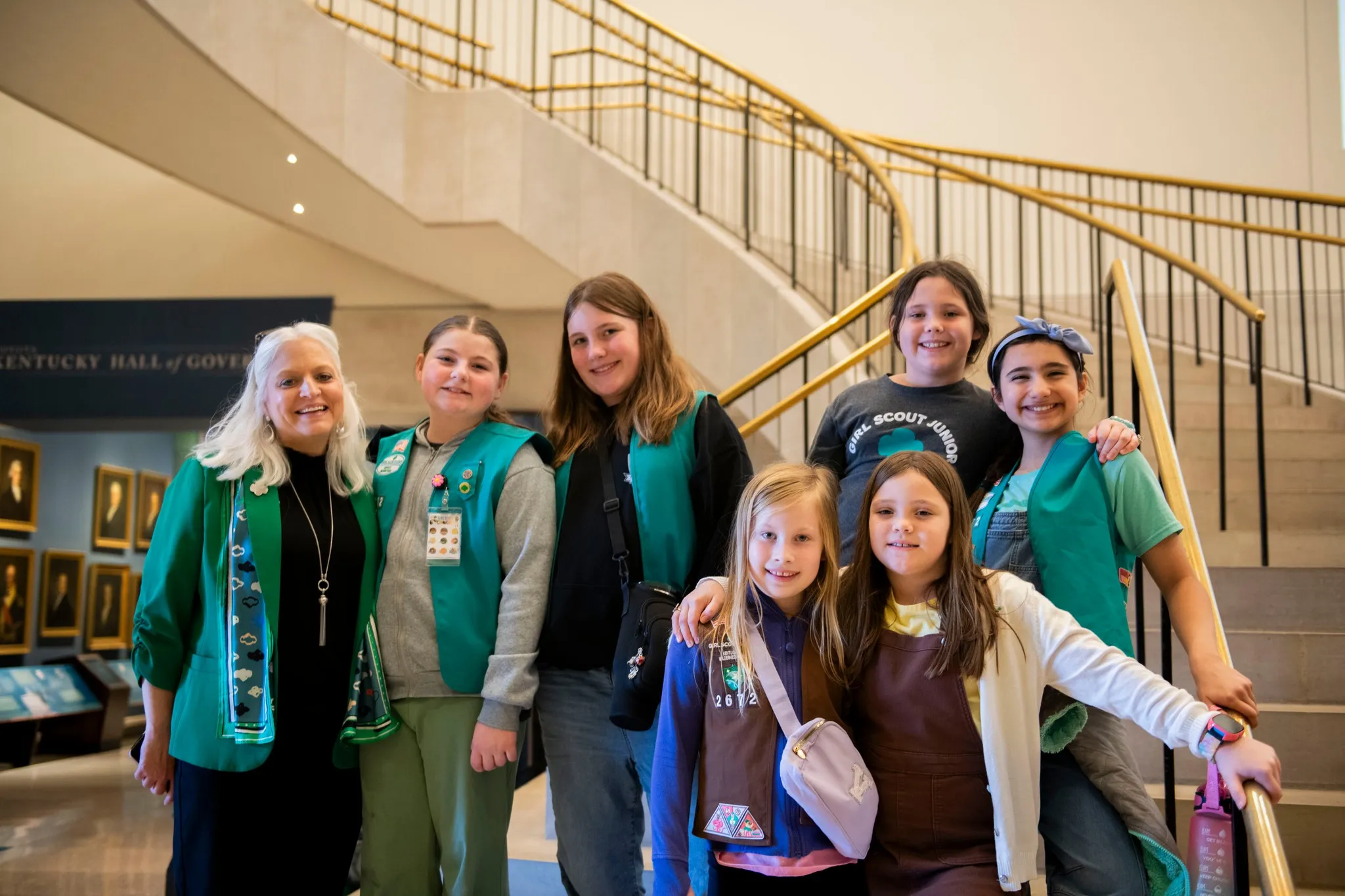
If you've ever purchased a box of Girl Scouts cookies, you probably know their mission is about helping girls build courage, confidence, and character. But behind that familiar brand is much more: a long-term pipeline for girls as they grow into adulthood, built around leadership, resilience, life skills, STEM, safe risk-taking, and the steady development of agency.
Susan Douglas knows this well. As CEO of Girl Scouts of Kentucky's Wilderness Road (GSKWR), Susan leads an organization serving 66 counties in eastern Kentucky and one county in Ohio. Their work, Susan says, isn't about one-and-done skill-building but about “the holistic nature of the program.”
Yet despite the depth of that work, GSKWR wasn't seeing it reflected in grant revenue. "There's a lot of funding to make a difference in these communities, and we weren't capturing any of it," Susan says. "We do the work already, and we weren't leveraging that in a way where it was fundable."
Across eastern Kentucky, families are navigating the effects of opioid use disorder, the transition from the coal economy, low educational attainment, and high rates of kinship care, often with grandparents raising grandchildren. Girl Scouts' programming offers exactly the kind of positive childhood experiences these communities need. But reaching more girls meant closing a financial gap GSKWR had yet to crack. The stakes were high.
Fully tapping into funding
Part of the challenge was actually the strength of the Girl Scouts brand itself. Many people, including funders, think they already know what Girl Scouts does—the cookies, the uniforms, the camping, the badges—but that half-painted picture made it harder for funders to see the organization's broader role in workforce readiness, youth development, and community resilience.
Compounding the issue, traditional revenue streams like program fees and product sales were not enough, especially in communities where families could not absorb the rising cost of extracurricular programming. "We needed a different funding model to make our program accessible," Susan says.
And that new funding model had to be more than small checks from donors. Susan was looking for transformational, multi-year investments that would enable GSKWR to do its work long-term.
A conference conversation that changed their trajectory
Then Susan crossed paths with Melissa Vermillion, Grant Ready Kentucky's (GRKY) Chief Strategy Officer, at the Brushy Fork Leadership Institute in Berea.
During a break, Susan told Melissa about GSKWR’s efforts to pursue Appalachian Regional Commission funding. The organization had already applied twice for ARC ARISE funding and was now pursuing an ARC POWER planning grant.
Melissa told her about an opportunity through GRKY to work with a grant coach who had federal funding experience. "I was very excited about the opportunity," Susan recalls. "I signed up before we even left the conference."
A reviewer's eyes on every word
Through GRKY, Susan was matched with Renee Parsons, a grant coach who helped her look at the proposal through a reviewer's eyes. Renee read every word. She questioned the objectives, reviewed the budget, sharpened the language, and helped Susan reframe the proposal so it better fit the expectations of a federal planning grant.
"Her ability to reframe some of the things that I wanted to accomplish in a way that would pass the test of a reviewer was amazing," Susan says. "It was feedback that I'd never had the opportunity to get before."
One phrase in the application raised a flag for Renee: "field test." Because the proposal was for planning, not implementation, Susan had to be careful not to make the work sound like direct program delivery. Renee helped translate GSKWR's goals into language that still captured the substance of the work while fitting the funding opportunity.
Renee's help extended beyond narrative. She walked Susan through the budget and gave the kind of detailed reviewer-style feedback few applicants ever get, at one point even meeting Susan face-to-face.
Lessons from a grant that didn’t land
Girl Scouts of Kentucky's Wilderness Road did not receive the ARC grant in that round. But the process still changed the organization's grant strategy. Susan came away with stronger language, clearer objectives, a better sense of how federal reviewers read proposals, and a deeper understanding of how to treat grant applications as part of long-term relationship building. When the application did not move forward, she immediately asked for feedback from the grantor, already thinking about how to strengthen the next attempt.
That follow-up reflex, encouraged by Renee, traces back to a phrase Susan borrowed from a coworker: "uncommon persistence." In grant work, she explains, rejection is rarely the end of the conversation; more often, it is the start of one.
In the world of grant seeking, "If you're told 'no,' it's 'no, for right now,'" Susan says. "If you truly believe your programming aligns with a grant funding agency, sometimes the first proposal is your introduction. It's that 'I want to get to know you' opportunity."
For Susan, that's what uncommon persistence looks like in practice—treating every "not yet" as a chance to refine your case, deepen the relationship, and come back stronger.
Capacity that's already paying off
Those lessons carried into other funding opportunities. While working on the ARC proposal, Susan was applying for other grants too. The clearer case, stronger objectives, and funder-friendly language helped the organization exceed its grant funding goals early.
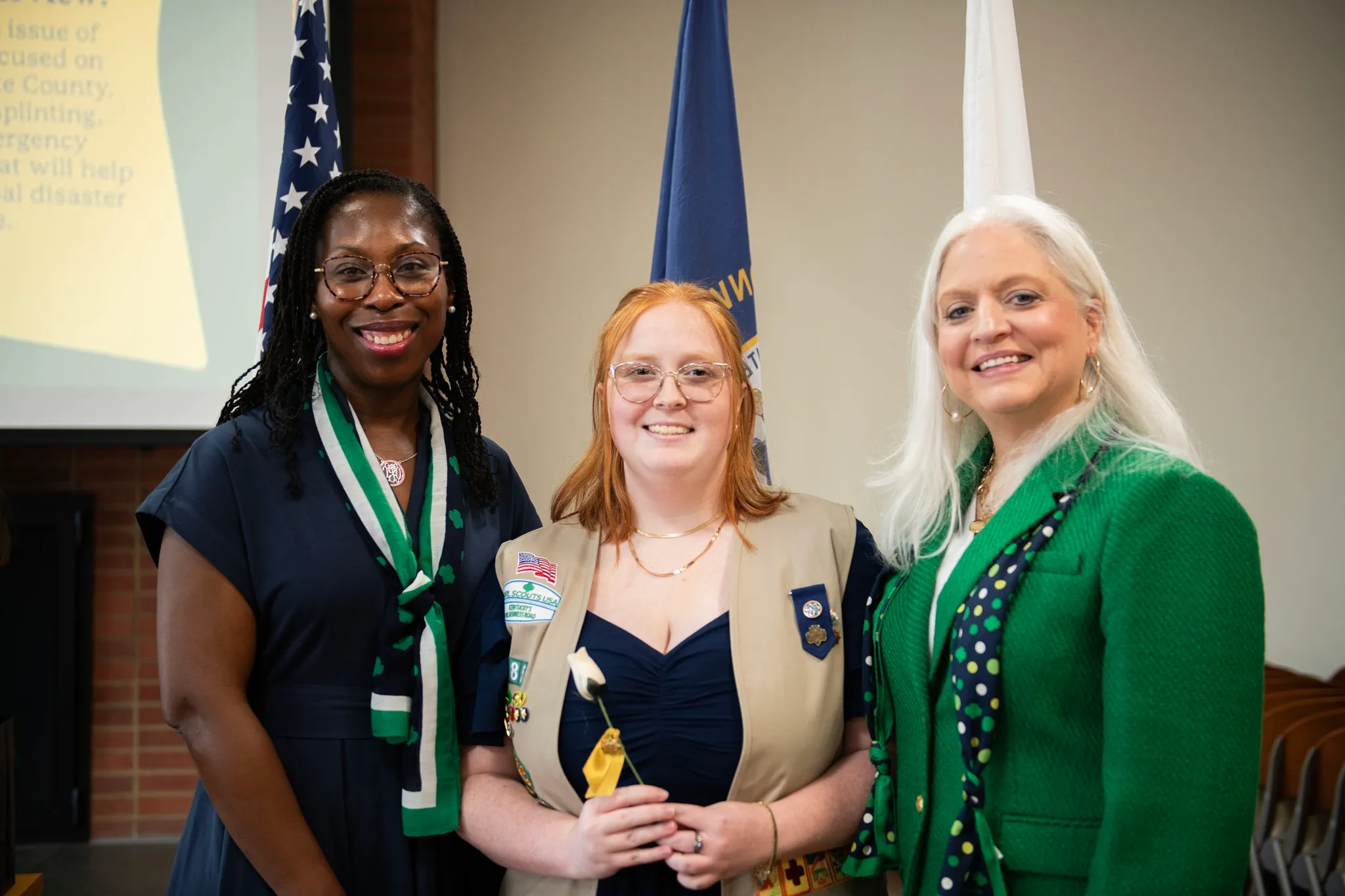
"We went from $150,000 in 12 months last year to $250,000 in the first three months of this year," Susan says.
That is the real story: not one grant won or lost, but capacity built and the confidence to keep seeking if at first they don’t succeed.
GRKY helped Susan better translate the value of GSKWR’s work into language funders could understand. That matters because only a small share of philanthropic dollars goes to organizations directly benefiting girls and women, even though women and girls are vital in shaping our families, schools, workplaces, and communities.
"Only two percent of philanthropic dollars in the United States—two percent!—support organizations that directly benefit girls and women," Susan notes. "You have to buy in to the women in the community because that's where you're going to see the greatest change."
For Susan, grant funding is part of a larger strategy to make sure cost is never the reason a girl misses out on a life-changing experience. "We see our grant funding partners as a true partner in those outcomes," she says.
A trusted resource
Susan says GRKY is an approachable, trusted resource, including for organizations that know they do meaningful work but struggle to explain it to funders. Although applying for grants can seem daunting, GRKY helps organizations understand not only how to pursue funding and expand their programming, but how to see and communicate the value of what those organizations already do.
Thanks to GRKY’s support, Susan got a toolkit of new grant seeking tactics, a first-quarter grant total that outpaced what the GSKWR had brought in the entire year prior, and a roadmap for pursuing long-term funding. While funders are tracking applications, Susan has her eye on something further out: a girl, a few years from now, sitting in a program her family couldn't have paid for, and a woman beside her who hadn't known GSKWR was built for her, too.