.webp)
“Can you imagine going two or three days without water—let alone 30?” said Angelia Hall, Grants Coordinator at Perry County Fiscal Court.
That was the situation in the mountains of Perry County one fateful winter about 10 years ago. A deep winter freeze triggered failures across an aging, fragile water distribution system. Tanks depleted. Lines broke. Leaks compounded. And for more than 30 days, the town of Buckhorn, Kentucky, went without running water.
The impacts rippled through the community: families’ daily routines collapsed; a local school couldn’t stay open; older residents and medically vulnerable neighbors feared for their lives; public officials were pulled into constant triage. "If you don't get water into the homes, then it's hard for students to get clean, to take a bath and come to school,” said Hall, “and therefore, it makes learning difficult. You don't want to come to school if you can't take a bath."
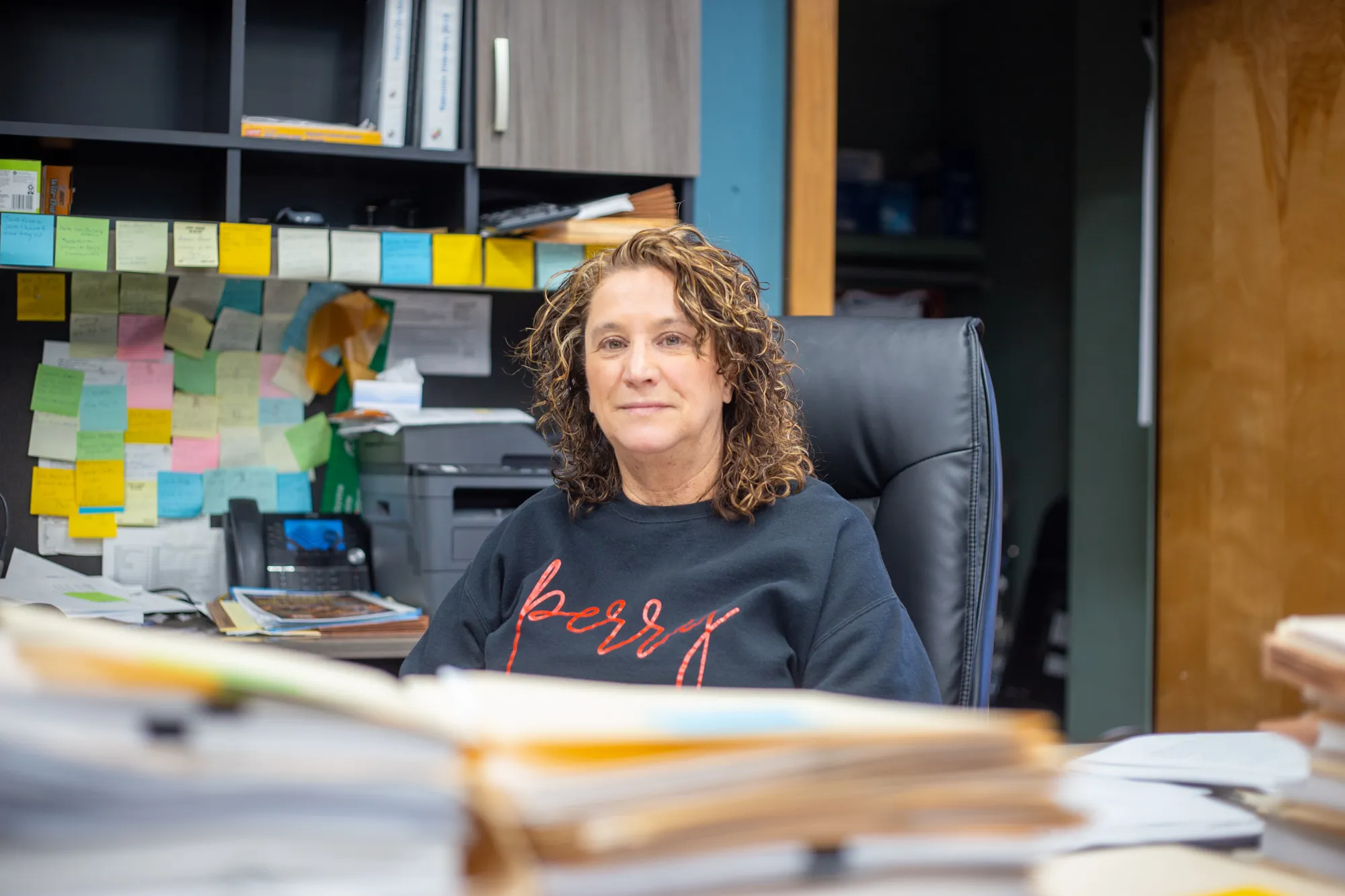
At one point, even the National Guard was called in to help set up a purification system and run a water distribution route.
That crisis didn’t come out of nowhere, but it also wasn’t a single person’s fault. Rather, it originated from a system suffering several fragilities.
Scott Alexander was the newly elected Perry County Judge Executive at the time of the emergency. “We were in a crisis of jobs, and so my focus was on jobs, and job creation,” he said, “and right out the gate, being a newly elected official, I realized our infrastructure was upside down.”
This story is about how one rural county, with the help of the GRANT Program, managed to change that system for the better.
The Moment Local Anger Turned Into a Long-Term Plan
During the crisis, citizens’ frustration came face-to-face with the local government. Officials held a public meeting, and frustrated residents showed up. An uncomfortable meeting ensued. Out of that tension came a striking realization: the community’s problems were larger and more structural than many people had realized.
The most convenient path would have been a series of partial solutions: short-term repairs, incremental extensions, and a long grind of chasing funding sources that rarely align with rural capacity or timelines. Instead, local leadership began laying out short-term actions alongside long-term goals, committing to a plan strong enough to survive election cycles, budget cycles, and the inevitable fatigue that comes with infrastructure projects that take years to build.
A System Built for One Small Town, Asked to Serve an Entire County
Perry County’s water challenge was not simply about distance on a map. It was about physics, terrain, and a chain of dependencies.
The county’s primary treatment capacity came from the City of Hazard’s plant, which moved treated water through a series of tanks across mountainous terrain. "It's 40 miles from the Hazard City plant to the Buckhorn tank,” said Hall. Water had to travel tank to tank, rising and falling across multiple ridgelines through successive pumping and gravity-fed segments.
In normal conditions, that system worked. In extended freeze conditions, it could fail in a cascading way: breaks and leaks increased demand, tanks drained faster than they refilled, and if upstream tanks couldn’t stabilize, the farthest tank could not recover. Hall emphasized that when the system breaks somewhere in the middle of that 40-mile route, “there's no bypassing—you can't run water from Hazard to Buckhorn.” There was no quick fix that delivered emergency water to the end of the line.
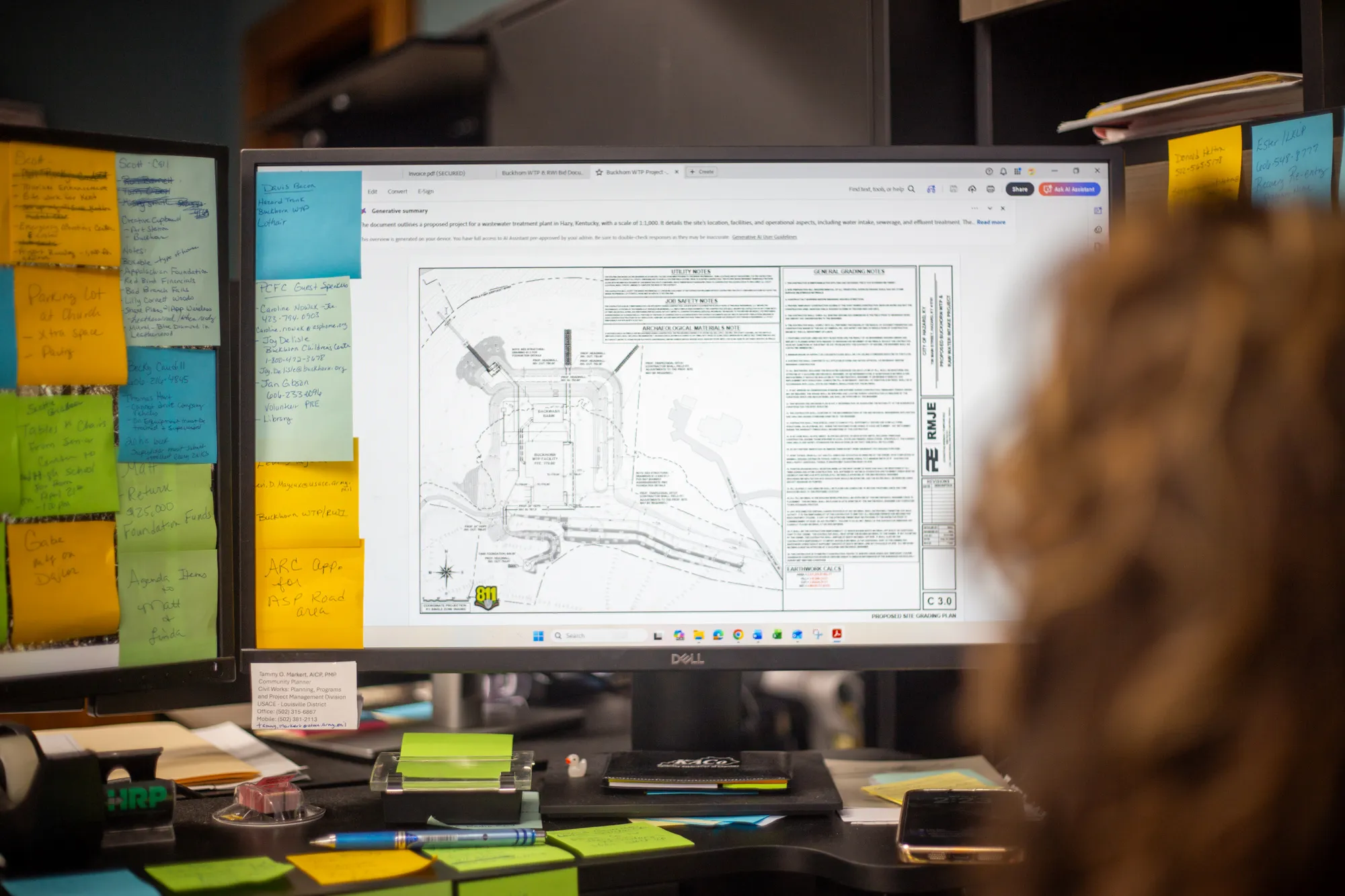
Over time, the risk had only grown. As service expanded—from serving just the city of Hazard to over 80 rural communities—the plant and its outgoing infrastructure were forced to do more than they were designed to do. This created a gap between what residents needed and what the system could reliably deliver.
But without some kind of breakthrough, the county was staring at a future where the costs of desperately needed infrastructural repairs would quickly outgrow their financial means.
Where Rural Projects Usually Stall: The Match Problem
For communities like Buckhorn, the challenge usually isn’t identifying the right project or having the know-how to solve it; it's navigating the administrative maze just to get in the game.
Large federal infrastructure grants are often only available to those communities that can produce sizable local match dollars upfront. These are cash contributions that may be routine in larger cities but can be impossible for small municipalities with a limited tax base, limited staff, and multiple urgent needs competing for the same money.
That match requirement creates an inequality: two places with the same need and technical solutions face two entirely different futures based on whether they can raise the match. In short, the playing field is not level.
Alexander described the local match as one of the biggest hurdles that keeps small communities stuck before a project even begins. "If right out of the gate we're facing a $15 or $20 million project and the local match is $4 million, $5 million, then we’re out of the game.”
Hearing About the GRANT Program and Realizing the Math Had Changed
Hall first heard about the GRANT Program through her ongoing work in Frankfort and conversations with state-level partners and legislators.
"When I crunched the numbers and saw the dollar value that I could get on that grant match, it was absolutely wonderful news,” Hall said.
A statewide match pool could turn federal funding from a long shot into something bankable. A rural community could pursue a grant opportunity without gambling its future on an impossible local fundraising burden.
The GRANT Program didn’t simply add another funding source; it changed what rural communities can reasonably attempt. “We followed up with letters to Senate leadership, and House leadership, our delegation about how valuable and how important this program is,” Alexander said.
And it freed Perry County up to move faster and—maybe even more importantly—to dream bigger. “We could [now] dream dreams we had never dreamed of,” said Alexander.
What the GRANT Program Actually Did for Buckhorn
The Buckhorn solution is not some single asset band-aid but a system-wide fix. The long-term plan includes building a new water treatment plant on the Middle Fork of the Kentucky River in Buckhorn, along with the infrastructure needed to reliably transport treated water to the farthest reaches of their service areas.
The GRANT Program’s role in this story is directly tied to a critical piece: the transmission line. Hall describes how GRANT match support helped Perry County leverage major federal dollars for transmission infrastructure, support that would have been extremely difficult to assemble locally. With match barriers all but erased, the county can pursue the full buildout instead of settling for a narrower version that would have less impact and more cost. As Alexander lays plain, "It would turn an eight-year start of the project into a 16-plus-year start of the project, which then would have turned a $60 million project into an $80 million project, which would have even set us back more. So where does that cycle stop without these grant dollars?"
This is the heart of the “level playing field” story: communities that have carried urgent needs for decades can finally execute projects at the scale their problems demand. Grant Ready Kentucky, whose push in Frankfort helped secure $200 million in state dollars to make hundreds of projects like this one possible, has worked alongside these communities to translate that match pool into real federal leverage on the ground.
For Hall, the math represents a staggering shift in what’s possible for her community. "It helped us leverage $19 million to build this transmission line," she explained, noting that the local burden was reduced to a fraction of the total cost. "The rest of the project is being grant-funded—so, around $200,000. Around $200,000 for $19 million in projects."
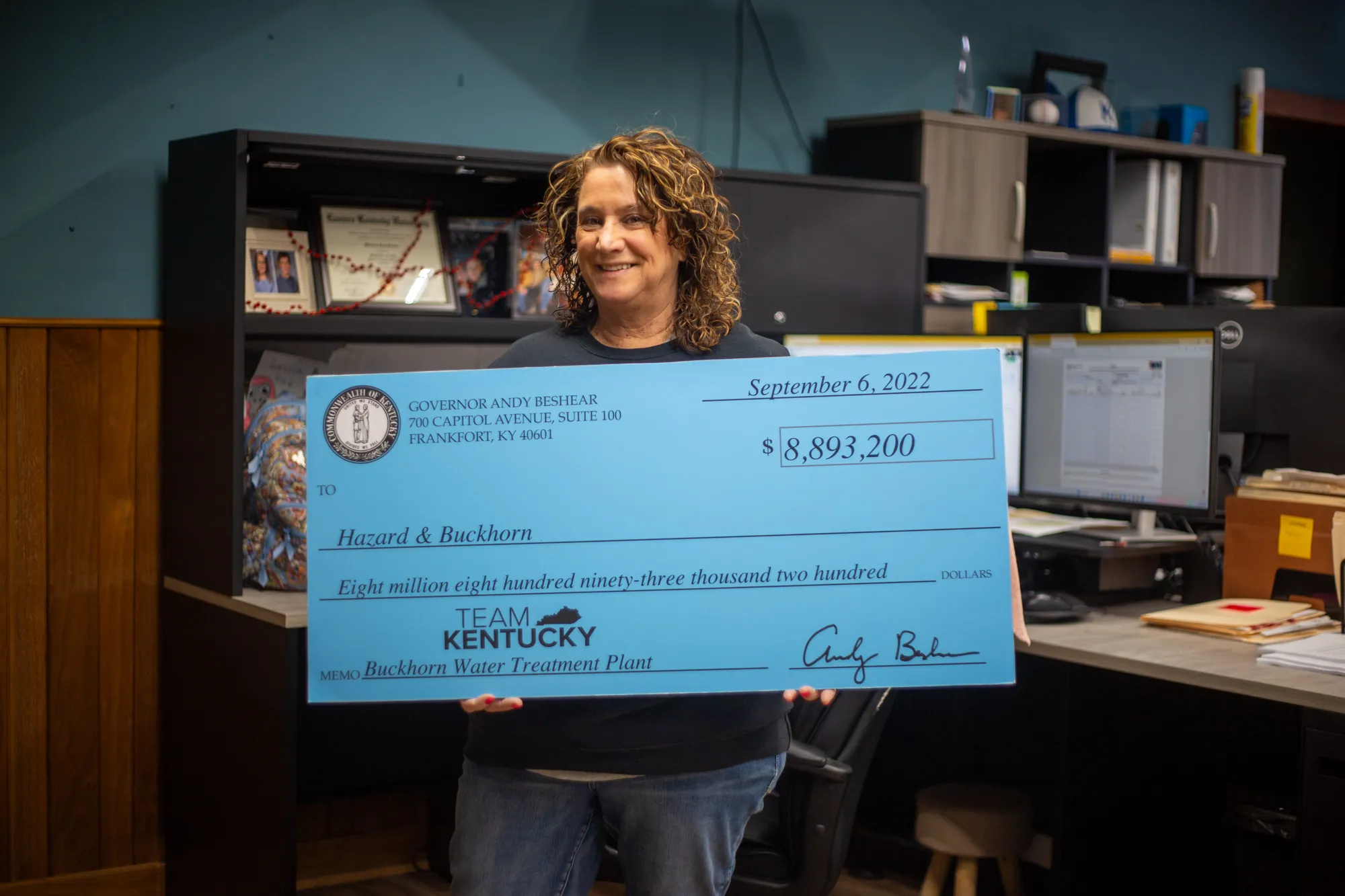
Site construction for the new plant officially began in early January 2026.
Alexander notes that the changes this new plant ushers in for Buckhorn are not lost on the residents. Under the old system, Buckhorn was the end of a long chain, with Hazard benefiting first and Buckhorn often the first to lose service during system stress. They understand that with the dedicated Buckhorn plant, the water coming off will feed Buckhorn first.
“Awesome, isn't it?" said Hall.
“A Double Win:” Public Health and Economic Growth
While clean, reliable water is a public health foundation, it is also an economic foundation.
Alexander connects the water project to a second goal that has defined Perry County’s last decade: rebuilding opportunity. When communities recruit employers—especially industrial users—water capacity is often a deciding factor. Many places can make the pitch; fewer can guarantee the utility backbone that businesses require.
"It's a double win for our community,” emphasized Alexander. “First, for the well-being of our citizens. Second, for our economic growth, job creation, and getting companies to locate here that need water. So our industrial parks are going to go from us recruiting companies to come here to us saying, ‘We've got the water—who wants to come here?’"
This project shifts Perry County’s posture from hoping companies will take a chance to confidently saying that the water capacity exists and welcoming them in with open economic arms.
Lessons for Other Rural Communities
Perry County has become one of the most active GRANT Program users in the state, an indicator not only of need but of readiness to pursue solutions once the match barrier is removed.
Hall’s takeaway is that rural communities need to invest in grant capacity, pursue every viable funding path, and use match tools that allow them to compete for the scale of investment their infrastructure requires. Moreover, said Hall, “it is one of the easiest grant processes that I have used. And it's been probably the most simplified process that I've used."
She also offers constructive feedback, exactly the kind of program improvement insight that can help Kentucky keep widening access without adding burden:
- When federal awards are delayed or denied, the de-obligation and re-application steps can be repetitive; a streamlined resubmission pathway would save time for both applicants and the state
- Pre-development costs—design, engineering, Division of Water approvals, feasibility, and market studies—can determine whether a federal application is competitive, yet funding for those steps is often scarce
- Engineering capacity is strained statewide, but especially in rural communities, which are often competing for the same limited set of firms. This reinforces the need for creative shared approaches and early-stage support
What Comes Next
The work is not finished, but it has crossed the line that matters most in communities that have lived through repeated promises: it is now visible, tangible.
For the residents who remember hauling water and waiting weeks for the tanks to recover, “reliable” doesn’t mean “perfect.” In a region where deep freezes will always test pipes and pumps, a reliable system is built with redundancy, capacity, and proximity to the communities that cannot afford to be last in line again.
The Buckhorn project is one of many unfolding across the Commonwealth, thanks in no small part to the GRANT Program. But Buckhorn is an especially clear example of what changes for rural communities when those communities have access to match and can pursue the infrastructure their safety, schools, and economic futures depend on.
Alexander summed it up simply. “It allows rural and small communities to dream and solve issues that they never could have before.”