Creating pathways to funding for Kentucky communities
We provide grant writing and capacity building support for Kentucky organizations.
We provide grant writing and capacity-building support for Kentucky organizations.
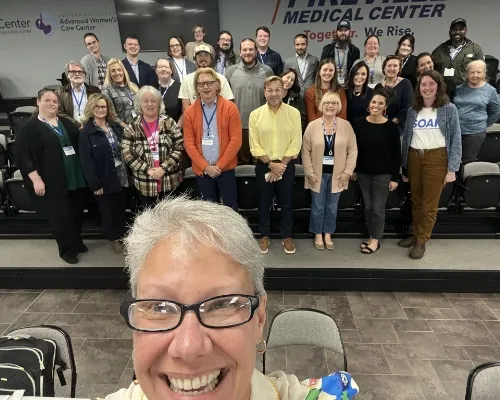







We believe every Kentucky community should have access to resources for growth and innovation. Our nonprofit empowers communities with the capacity, confidence, and connections to turn local visions into lasting impact.
Advancing Kentucky One Opportunity at a Time
We are a collective of grant experts, policy advocates, philanthropists, and nonprofit professionals helping under-resourced organizations build capacity, navigate complex applications, and secure funding through training, personalized coaching, and support needed to ignite impact across Kentucky.
Are You Grant Ready?
Learn Here.
Learn hereNeed Grant Help?
Find Support.
Find supportAre You a Grant Pro?
Join the Registry.
Join registryUpcoming Training Events
View allNovember 2026
Tue
10
–
10:00 am
–
11:30 am ET
Virtual Webinar
Webinar
End the Year Well: Boundaries and Strategies for a Thriving Life
Event Details
This is the final webinar in the Thriving Grant Professional Series. Healthy boundaries help us live life to the fullest. In this timely webinar, participants will gain critical insights and practical strategies for establishing healthy boundaries and strategies to keep them for a thriving life through the holiday season and into the new year.
This is some text inside of a div block.
November 2026
Thu
12
–
10:00 am ET
–
11:30 am ET
Virtual Webinar
Webinar
Demystifying New Markets Tax Credits
Event Details
Have you written off New Markets Tax Credits as too complicated, or assumed your organization or project wouldn't qualify? This webinar is for you. Emma Wyatt of TD Community Development Corporation, Monica Blanton of Bright Bridge Inc., and Jim Seiffert, JD, of McBrayer Law will walk through how NMTCs work, who's involved in a deal, what makes a project eligible, and how these credits can be paired with other funding to bring commercial, industrial, and community facility projects to life in low income communities. You'll leave with a clear picture of whether NMTCs could work for you and how to start the conversation.
This is some text inside of a div block.
November 2026
Tue
17
–
Wed
18
9:00 am
–
4:00 pm CT
Paducah, KY
Virtual Webinar
Workshop
Two-Day Grant Writing Training
Event Details
Save the date for this two-day workshop all about grant writing. The comprehensive workshop covers everything from the basics of grant writing to the critical sections of a proposal, from the need/problem statement to the budget justification.
This is some text inside of a div block.
November 2026
Thu
19
–
9:00 am
–
4:00 pm CT
Hopkinsville, KY
Virtual Webinar
Workshop
Grant Application Bootcamp
Event Details
The Grant Application Bootcamp, hosted by Kentucky Nonprofit Network and Grant Ready Kentucky, is an intensive, hands-on workshop focused on strengthening the core components of a competitive grant proposal, with an emphasis on clarity, alignment, and reviewer expectations.
This is some text inside of a div block.
Featured Grant Opportunities
View allHealth & Human Services
Foundation for a Healthy Kentucky
-
Kentucky Rural Health Transformation Plan
Rural Community Hubs for Chronic Care Innovation
State
Combination
Single Fixed Date
Supports organizations serving as Rural Community Hub Lead in a Kentucky Area Development District. Funds help launch and operate a local hub that convenes cross-sector partners, designs obesity and diabetes prevention and management initiatives, and passes funding through to local subrecipients.
Next funding deadline
November 6, 2026
Expected Decision Date
Max Award Amount
500000
Cost share/match Required
No - Cost share or match are not required, but sufficient capital and the fiduciary capacity to cover program costs must be shown before receiving the grant funds.
Eligible applicants
Nonprofit with 501C3 Status
Nonprofit without 501C3 Status
County Government
City or Township Government
Special District Government
Eligibile Geographies
Specific Kentucky Counties
Community & Economic Development
KY Cabinet for Economic Development
Kentucky Talent Recruitmen Grant Program
State
Grant Funding
Single Fixed Date
Competitive state grants from the Kentucky Cabinet for Economic Development to help Kentucky communities and regions attract and retain talent. Funds support relocation incentive programs, student retention efforts, and targeted marketing campaigns to draw new residents and keep graduates in the state.
Next funding deadline
November 6, 2026
Expected Decision Date
Max Award Amount
500000
Cost share/match Required
Yes - The match is 20% of total project cost, at a minimum. Match may be cash, local investment, or in-kind contributions, including staff time, memberships, and services.
Eligible applicants
County Government
City or Township Government
Nonprofit with 501C3 Status
Nonprofit without 501C3 Status
Eligibile Geographies
Anywhere in Kentucky
Community & Economic Development
Education & Workforce
Health & Human Services
Tourism, Culture & Recreation
Public Safety & Disaster Resilience
Institute of Museum and Library Services
National Leadership Grants for Libraries
Federal
Grant Funding
Single Fixed Date
Funds projects that enhance the quality of library services nationwide. Specifically, projects that: promote adult reading, and health and financial literacies; focus on programming and archival practices related to shared American history; manage and preserve the national information infrastructure; serve the public’s information and education needs; enhance library and information services through effective and efficient use of new and emerging technologies; improve community prosperity; provide emergency services to communities during disasters and emergencies; and build collaborative partnerships between libraries, archives, and museums that benefit the communities they serve.
Next funding deadline
November 13, 2026
Expected Decision Date
Max Award Amount
1000000
Cost share/match Required
Other - Cost share is only required for National Implementation Projects in which case 1:1 match is required if requesting more than $299,999.
Eligible applicants
Nonprofit with 501C3 Status
State Government
County Government
City or Township Government
Public School District
Eligibile Geographies
US
Education & Workforce
Health & Human Services
The IECA Foundation
The IECA Foundation Grants
Private
Grant Funding
Single Fixed Date
Helps underserved youth and young adults make informed educational choices. Just as IECA consultants provide objective assessment, personalized counseling, and family engagement, the Foundation funds initiatives that employ similar strategies to create positive, lasting change.
Next funding deadline
November 20, 2026
Expected Decision Date
Max Award Amount
No max defined
Cost share/match Required
No
Eligible applicants
Nonprofit with 501C3 Status
Eligibile Geographies
US
Community & Economic Development
Tourism, Culture & Recreation
South Arts
South Arts - Arts Journalism Grants
Private
Grant Funding
Single Fixed Date
Pilot grants for arts journalists and news organizations in nine Southern states, including Kentucky. Funds reporting, freelance assignments, travel, technology, professional development, and dependent care for public-interest coverage of the arts.
Next funding deadline
November 20, 2026
Expected Decision Date
Max Award Amount
10000
Cost share/match Required
No
Eligible applicants
Nonprofit with 501C3 Status
For Profit Organization
Artist
Individual
Nonprofit without 501C3 Status
Eligibile Geographies
Anywhere in Kentucky
Tourism, Culture & Recreation
Levitt Family Foundation
Levitt Family Foundation Festival Grants
Private
Grant Funding
Single Fixed Date
Grants of up to $5,000 to produce free outdoor festivals in 2027 where live music by paid professional musicians is a significant part of the program.
Next funding deadline
November 20, 2026
Expected Decision Date
Max Award Amount
5000
Cost share/match Required
Yes - The grant must be 30% or less of total festival expenses, so at least 70% must come from other sources. In-kind donations do not count toward the 70%. There is no minimum or maximum festival budget.
Eligible applicants
Nonprofit with 501C3 Status
Nonprofit without 501C3 Status
Eligibile Geographies
US
Health & Human Services
Kentucky Office of the Attorney General
-
Kentucky Opioid Abatement Advisory Commission (KYOAAC)
KYOAAC Treatment & Recovery
State
Grant Funding
Single Fixed Date
Funds must be used to provide treatment and recovery services for individuals who have or are at risk of one of the following: • Opioid Use Disorder (OUD) • Opioid Use Disorder (OUD) and comorbid polysubstance use • Opioid Use Disorder (OUD) and co-occurring mental illness • Opioid Use Disorder (OUD) and comorbid polysubstance use and co-occurring mental illness.
Next funding deadline
December 17, 2026
Max Award Amount
1000000
Cost share/match Required
No - Cost share/match is not required, but application requests available other funding/match to demonstrate project sustainability.
Eligible applicants
For Profit Organization
Nonprofit with 501C3 Status
Nonprofit without 501C3 Status
County Government
City or Township Government
Eligibile Geographies
Anywhere in Kentucky
Health & Human Services
Kentucky Office of the Attorney General
-
Kentucky Opioid Abatement Advisory Commission
KYOAAC Prevention Grants
State
Grant Funding
Single Fixed Date
The purpose of this funding opportunity is to provide settlement dollars for prevention-focused efforts addressing the opioid epidemic. Funds must be used to provide prevention services for individuals who have or are at risk of one of the following: • Opioid Use Disorder (OUD) • Opioid Use Disorder (OUD) and comorbid polysubstance use • Opioid Use Disorder (OUD) and co-occurring mental illness • Opioid Use Disorder (OUD) and comorbid polysubstance use and co-occurring mental illness
Next funding deadline
December 17, 2026
Max Award Amount
1000000
Cost share/match Required
No - No cost share or match is required; however, the application requests that any additional available funding or match funding be reported to demonstrate sustainability efforts.
Eligible applicants
Nonprofit with 501C3 Status
Nonprofit without 501C3 Status
County Government
City or Township Government
Special District Government
Eligibile Geographies
Anywhere in Kentucky
Health & Human Services
Kentucky Office of the Attorney General
-
Kentucky Opioid Abatement Advisory Commission (KYOAAC)
KYOAAC Strengthening Kentucky's Youth Mentorship Infrastructure for Substance Use Prevention
State
Grant Funding
Single Fixed Date
Funding to strengthen Kentucky’s capacity to prevent youth substance use by building the organizational, workforce, partnership, and community infrastructure necessary to ensure that young people have access to safe, supportive, and sustained relationships with caring adults.
Next funding deadline
December 17, 2026
Max Award Amount
1000000
Cost share/match Required
No - Cost sharing/ match is not required, but applicants are encouraged to report additional available funding or matching resources that demonstrate sustainability efforts.
Eligible applicants
Nonprofit with 501C3 Status
Nonprofit without 501C3 Status
County Government
City or Township Government
Special District Government
Eligibile Geographies
Anywhere in Kentucky
Housing
Kentucky Department for Local Government
-
Office of Federal Grants
Community Development Block Grant (CDBG) - Housing
State
Grant Funding
Single Fixed Date
The Housing program works to fund projects designed to develop decent, safe, sanitary and affordable housing.
Next funding deadline
February 1, 2027
Max Award Amount
1000000
Cost share/match Required
Yes - Varies based on project type
Eligible applicants
County Government
City or Township Government
Eligibile Geographies
Specific Kentucky Cities or Towns
Community & Economic Development
Health & Human Services
Kentucky Department for Local Government
-
Office of Federal Grants
Community Development Block Grant (CDBG) - Public Services (Recovery Kentucky)
State
Grant Funding
Single Fixed Date
Public Services funds support the Recovery Kentucky program in the form of operational costs for existing Recovery Kentucky Substance Abuse Centers. These centers serve individuals with a history of substance abuse, with an emphasis on the homeless, those at risk of becoming homeless, and those referred by the judicial system.
Next funding deadline
February 1, 2027
Max Award Amount
200000
Cost share/match Required
Yes - Varies based on project type
Eligible applicants
County Government
City or Township Government
Eligibile Geographies
Specific Kentucky Cities or Towns
Tourism, Culture & Recreation
South Arts
Arts in Rural Places
Private
Grant Funding
Rolling
Supports community engagement projects with funding for artist fees to engage Southern guest film directors; traditional, visual, and performing artists; or writers from inside or outside of the presenter's state. Artist fee support will be awarded for the following: film, traditional arts, visual arts, performing arts, and literary arts.
Next funding deadline
April 30, 2027
Max Award Amount
3000
Cost share/match Required
Yes - Dollar for dollar match toward the artist's fee is required.
Eligible applicants
Nonprofit with 501C3 Status
State Government
County Government
City or Township Government
Eligibile Geographies
Anywhere in Kentucky
Infrastructure, Transportation & Energy
Public Safety & Disaster Resilience
US Department of Transportation
-
National Highway Traffic Safety Administration
Innovative Traffic Safety Enforcement (ITSE) Grant Program
Federal
Grant Funding
Single Fixed Date
Funding to develop innovative traffic safety enforcement programs that demonstrate effectiveness by reducing the number of motor vehicle crashes due to one or more of the subject risky driving behaviors; and ensure the traffic safety enforcement programs are repeatable and scalable for use by law enforcement throughout the United States.
Next funding deadline
September 1, 2027
Max Award Amount
20000000
Cost share/match Required
No
Eligible applicants
State Government
County Government
City or Township Government
Special District Government
Nonprofit with 501C3 Status
Eligibile Geographies
US
Community & Economic Development
Health & Human Services
Infrastructure, Transportation & Energy
Public Safety & Disaster Resilience
USDA
-
Rural Development
Community Facilities Direct Loans & Grants
Federal
Combination
Single Fixed Date
Provides funding to develop essential community facilities, which are defined as facilities that provides an essential service to the local community for the orderly development of the community, carrying out a function customarily provided by a local unit of government. These do not include private, commercial or business undertakings.
Next funding deadline
September 30, 2027
Max Award Amount
No max defined
Cost share/match Required
Other - Cost share is required for grants. The amount is dependent upon population and median household income. Cost share ranges from 25% to 85% for grant funding.
Eligible applicants
Nonprofit with 501C3 Status
Nonprofit without 501C3 Status
State Government
County Government
City or Township Government
Eligibile Geographies
Specific Kentucky Counties
Agriculture & Environment
Education & Workforce
Community & Economic Development
Housing
Public Safety & Disaster Resilience
Health & Human Services
US Department of Commerce - Economic Development Administration
EDA Disaster Supplemental Grant Program - Industry Transformation Pathway
Federal
Grant Funding
Rolling
Funding through the Industry Transformation Pathway will help communities and regions devise and implement long-term economic recovery strategies through large, multi-component initiatives to transform regional economies in areas where a Presidential declaration of a major disaster was issued in 2023 and 2024.
Next funding deadline
Rolling deadline
Max Award Amount
50000000
Cost share/match Required
Yes - In general, applicants must provide at least 20 percent of the approved project cost via cash and/or in-kind contributions; however, the funding agency may require a greater matching share from certain applicants. This funding opportunity qualifies for the Kentucky Cabinet for Economic Development's GRANT Match.
Agriculture & Environment
Education & Workforce
Community & Economic Development
Housing
Public Safety & Disaster Resilience
Health & Human Services
US Department of Commerce - Economic Development Administration
EDA Disaster Supplemental Grant Program - Readiness Pathway
Federal
Grant Funding
Rolling
Funding through the Readiness Pathway will help communities and regions devise and implement long-term economic recovery strategies through a variety of non-construction projects to build capacity for future recovery in areas where a Presidential declaration of a major disaster was issued in 2023 and 2024.
Next funding deadline
Rolling deadline
Max Award Amount
50000000
Cost share/match Required
Yes - In general, applicants must provide at least 20 percent of the approved project cost via cash and/or in-kind contributions; however, the funding agency may require a greater matching share from certain applicants. This funding opportunity qualifies for the Kentucky Cabinet for Economic Development's GRANT Match.
Community & Economic Development
Education & Workforce
Housing
US Bank Foundation
Community Possible Grants
Private
Grant Funding
Rolling
The purpose of this program is to support the efforts of nonprofit organizations to build vibrant communities that offer stable jobs, homes, and communities connected through culture, recreation, and play. The program focus is to support organizations with an intentional approach to addressing immediate needs and systemic economic barriers to success.
Next funding deadline
Rolling deadline
Max Award Amount
No max defined
Cost share/match Required
No
Health & Human Services
Housing
Healing Appalachia
Healing Appalachia Grant Program
Private
Grant Funding
Rolling
Funding life-saving prevention, recovery and wellness programming across Appalachia and beyond - but heavily focused in Central Appalachia (Eastern Kentucky, West Virginia, East Tennessee and western Virginia). Additionally, Hope in the Hills funds music therapy and festival outreach around the region.
Next funding deadline
Rolling deadline
Max Award Amount
15000
Cost share/match Required
No
Eligible applicants
Nonprofit with 501C3 Status
Eligibile Geographies
Specific Kentucky Counties
Community & Economic Development
United States Department of Commerce
-
Economic Development Administration
EDA Public Works and Economic Adjustment Assistance Programs
Federal
Combination
Rolling
Provides investments that support construction, non construction, planning, technical assistance, and revolving loan fund projects under EDA’s Public Works program and EAA program (which includes Assistance to Coal Communities, Nuclear Closure Communities, and Biomass Closure Communities).
Next funding deadline
Rolling deadline
Max Award Amount
30000000
Cost share/match Required
Yes - Match may be cash or in-kind. In general, applicants must provide at least 40% of the total project costs via match; however, the funding agency may fund a higher percentage of the total project costs in limited circumstances based on the relative needs of the region.
Eligible applicants
County Government
City or Township Government
Special District Government
Private Institution of Higher Education
Public/State-Controlled Institution of Higher Education
Eligibile Geographies
Specific Kentucky Counties
Community & Economic Development
Health & Human Services
Education & Workforce
Agriculture & Environment
Columbia Gas of Kentucky
-
Columbia Cares
Columbia Cares Community Grants
Corporate
Grant Funding
Rolling
Columbia Gas of Kentucky provides charitable grants to eligible nonprofit organizations serving its Kentucky communities. Funding emphasizes community impact and alignment with company giving priorities, with additional consideration for organizations where Columbia Gas employees are actively engaged. A current application pathway is available.
Next funding deadline
Rolling deadline
Max Award Amount
No max defined
Cost share/match Required
No
Eligible applicants
Nonprofit with 501C3 Status
Eligibile Geographies
Specific Kentucky Counties
Advancing Kentucky One Opportunity at a Time
We are a collective of grant experts, policy advocates, philanthropists, and nonprofit professionals helping under-resourced organizations build capacity, navigate complex applications, and secure funding through training, personalized coaching, and support needed to ignite impact across Kentucky.